Author
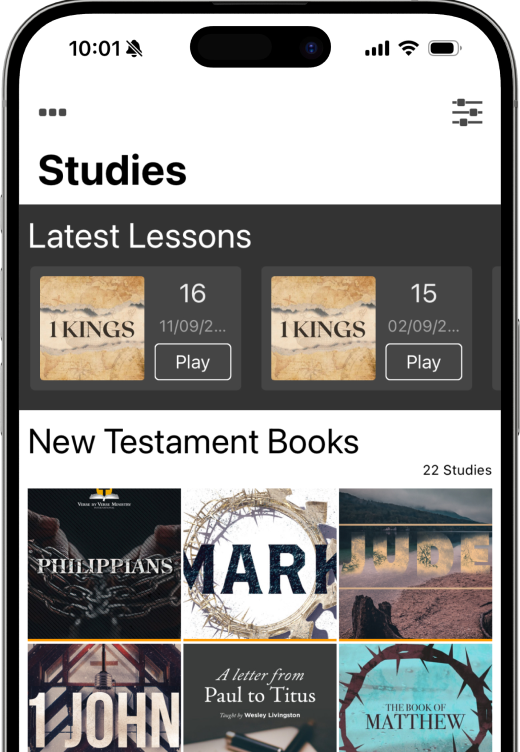
VBVMI StaffAccess all of our teaching materials through our smartphone apps conveniently and quickly.
Author
VBVMI StaffWhat are the horns mentioned in Zechariah 1:19-21?
When interpreting a verse, we need to look at it in context first:
These words were spoken through Zechariah at the end of Israel’s 70 years of captivity in Babylon. Babylon had since been conquered by Persia, and the prophet hears the Angel of the Lord asking the Father how much longer Israel must endure God’s judgment. The Father answers the Angel of the Lord (i.e., Christ) in v.13, yet Zechariah doesn’t share His answer with us.
Then the Angel of the Lord affirms that the Lord is very jealous for Israel and will show compassion upon them and build His house (i..e, the temple) again in Jerusalem. Moreover, the Lord confirms that Zion will rise in a day to come, speaking of the coming Kingdom on earth. These promises remind the reader that Israel’s distress under Gentile rulers was not intended to destroy them, and eventually the Lord will give Israel her proper place on earth as He promised.
Then the Lord gave the prophet a vision to confirm His promises to bring judgment against Israel’s Gentile oppressors and to bring comfort to Israel. Four horns brought terror to the prophet, but then four “smiths" or craftsmen appeared to hammer the horns into submission. Horns are symbols of power or authority in scripture, and a smith is one who brings strong things into submission, like a blacksmith working metal into shape.
Therefore, the four horns represent the four stages of the Age of Gentiles describes in Daniel 2 and 7, which are the kingdoms of Babylon, Medo-Persia, Greece and Rome, which will place Israel under Gentile authority. Eventually, these four horns will be brought into submission to Christ Himself at His Second Coming.
You can learn more about the Age of the Gentiles represented by these horns by listening to our Daniel Bible study.
Scripture quotations taken from the (NASB®) New American Standard Bible®, Copyright © 1995, 2020 by The Lockman Foundation. Used by permission. All rights reserved. www.lockman.org
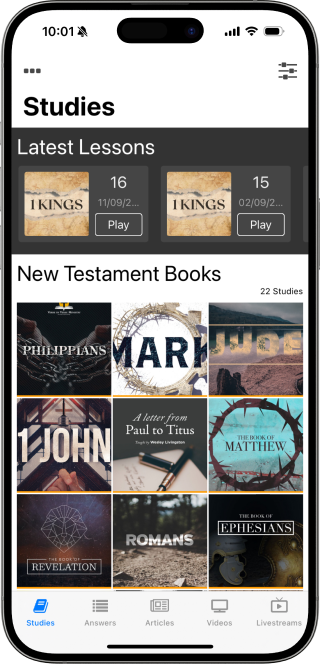
Access all of our teaching materials through our smartphone apps conveniently and quickly.


