Author
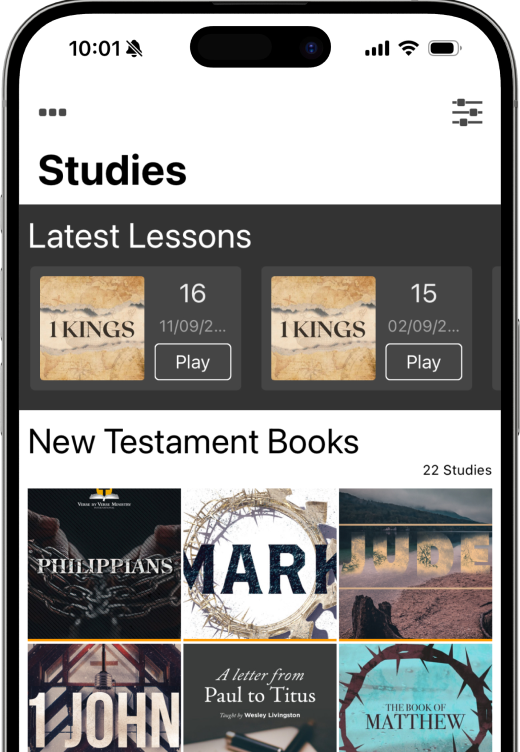
VBVMI StaffAccess all of our teaching materials through our smartphone apps conveniently and quickly.
Author
VBVMI StaffJesus told Peter in Matthew 16 that "upon this rock, He would build His church". What is the "rock?"
Jesus made His declaration to Peter in Matthew 16:
In response to Jesus’ question, Peter declared that Jesus was the Son of God, the Messiah. Jesus replied that Peter’s confession of faith was the result of the Father in heaven granting Peter this insight. Next, Jesus declares that Peter (which is Cephas in Aramaic) would be the rock upon which Jesus would build His church.
Jesus made a play on words as He renamed Simon. The name Peter in Greek is the word petros (in Aramaic, the word cephas), which means a stone or boulder. Later when Jesus said He would build His church on the "rock," He used a different Greek word petra, which refers to a large rock (as in a mountain cliff). Given Jesus' choice of two different Greek words for rock and the overall context of the passage, we must conclude Jesus was addressing two different aspects of building His church.
First, Peter’s declaration of faith in Christ was to be the model for how the body of Christ would grow. The church body would be a "building" consisting of men and women who followed in Peter’s footsteps repeating his declaration of faith in Jesus. Jesus is the Cornerstone of the church, and all believers are the "living stones" who place their faith in Him (see 1Peter 2:5).
Secondly, Jesus renamed Simon with the name Peter (i.e., stone) to indicate that Peter would play a unique role in the founding of the church. Jesus declared that Peter would possess the “keys” to the kingdom, and what Peter "bound" or "loosed" on earth would be confirmed in Heaven. Historically, the Catholic Church has used this verse to support the legitimacy of the papacy, while Protestants have categorically rejected the idea that Peter held special authority over the early church. The truth lies between these two extremes.
According to Matthew 16, Christ did assign Peter special authority in the early church (i.e., the "keys") to open the Gospel to three people groups so they might receive the Holy Spirit and enter the body of Christ. Peter fulfilled this commission in three steps as recorded in the book of Acts.
First, in Acts 2 Peter unlocked the Gospel for the Jewish people at Pentecost. Peter preached the Good News, and as a result the Jewish people gathered on that feast day began to receive the Gospel in Jerusalem and beyond.
The visible evidence of Peter “turning" a key of the kingdom was the arrival of the Holy Spirit followed by visible manifestations of the Spirit among a new group of humanity. At Pentecost the first group to receive the Holy Spirit were Jews, and once that key was turned by Peter, the Gospel remained forever open to Jews.
Next, Peter unlocked the Gospel for the Samaritan people in Acts 8.
Faith first came to the Samaritans through Philip, but the Holy Spirit's arrival awaited Peter's "turning of the key." When Peter arrived in Samaria to confirm the acceptance of the Gospel among the Samaritan people, he laid hands on the new believers and they received the Holy Spirit. This was Peter's turning of the second key of the kingdom. Notice that Peter’s presence was required before the Lord began the indwelling of the Holy Spirit (the mark of the Church saint) among Samaritans. What Peter "loosed" on Earth was loosed in Heaven.
Finally, Peter opened the door for Gentiles to receive the Gospel in Acts 10.
When Cornelius and his family received the Gospel, Peter was God's instrument to deliver the Holy Spirit again in keeping with the role Jesus assigned to him. After Peter “turned" this final key, the family of Cornelius received the Holy Spirit and began to manifest His presence as was seen earlier.
Once the Gentiles received the Gospel, Peter had turned his final key. No more keys exist, since the kingdom is now open to all groups of humanity (i.e., Jew, Samaritan, and Gentile). Having fulfilled his mission to open the kingdom, Peter then disappears from the record of Acts.
In summary, Peter was the “rock” upon whom Jesus built the church both by his example of faith and through his personal authority to open the Gospel to the three groups of humanity. Once Peter turned the keys, he was no longer the “rock” for he had met his purpose.
Scripture does not support the view of the Catholic Church, which holds that Jesus’ words established the papacy with Peter as the first pope. The institution of the papacy was asserted by the Catholic Church several hundred years after Christ’s death to further the church's political power in the face of a declining Roman Empire. Peter himself never assumed such a title or position nor did later church leaders during the three centuries following Peter.
Therefore, the authority of the papacy is historically and biblically illegitimate, and certainly nothing in Jesus' statement to Peter in Matthew 16 lends support to the Catholic position. Jesus was referring only to Peter's unique role in moving the Gospel outward during Peter's lifetime.
For more information on the keys of Kingdom, we encourage you to listen to our entire Acts Bible study:
Scripture quotations taken from the (NASB®) New American Standard Bible®, Copyright © 1995, 2020 by The Lockman Foundation. Used by permission. All rights reserved. www.lockman.org
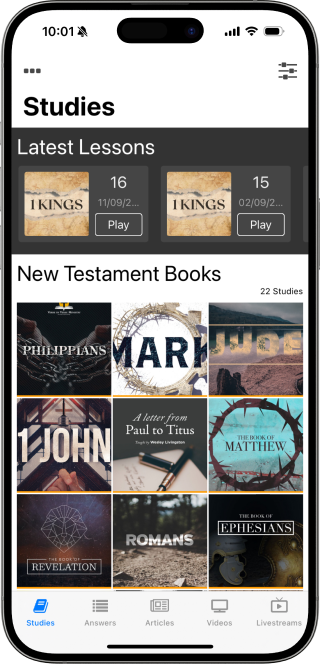
Access all of our teaching materials through our smartphone apps conveniently and quickly.