


Taught by
Stephen Armstrong
Taught by
Stephen ArmstrongLeon Morris wrote that John’s Gospel is a pool in which both a child can wade in and and elephant can swim in
It’s a book of simple yet profound truth, relying on metaphor and symbols to reveal Christ to be the only begotten Son of God
Chronologically, the Gospel of John was the next to last book of scripture penned at the end of the first century
Only the book of Revelation came later
And yet it’s often the first book we recommended to the person curious to know more about Christ or Christianity
John’s Gospel is so memorable partly because of its uniqueness among the Gospels and John’s distinct purpose in writing it
By the time John’s Gospel was written, the church had come to recognize that God’s timetable for Christ’s return was much longer than first anticipated
All but one of the apostles had died, and second and third generations of followers were now leading the church
The church was being embraced by Gentiles, even as its early Jewish constituencies were dwindling rapidly
All this made clear that the promise of a coming Kingdom needed to be understood with a new appreciation and patience
Certainly, it remains for a true, physical kingdom to arrive on earth, with Christ as the King reigning from Jerusalem
But by the time John wrote, few still expected that the arrival of that kingdom was right around the corner
After all, the earth had waited thousands of years for God to reveal Himself in Christ the first time
So it might take thousands of years more for His return
Therefore, unlike the other gospel writers, John approached his Gospel with the purpose of strengthening the church for the long period that lay ahead
John was Jewish but wrote for an increasingly Gentile church by taking time to explain Jewish words and customs and geography
In recognition that the Second Coming would not be soon, he emphasizes the present-day reality of Christ’s Kingdom and His ever-present authority in the lives of believers
He wanted believers to abide in Christ, to depend on His word
Because of his unique focus on living in the light of Christ (and because his Gospel came last), John chose to skip over many important moments in Jesus’ ministry
His omits Jesus’ genealogy, birth, baptism of John, His temptation in the desert, exorcising demons, no parables, the transfiguration, the Lord’s Supper, the time in Gethsemane, and His ascension
And in their place, he reveals Christ through extended discourses between Jesus and a variety of actors
A Pharisee
A woman of ill repute
A blind man, a lame man
A crowd seeking to be fed
His earthly brothers
And of course, His various disciples
These conversations are often comical, resembled two ships passing in the night
Jesus will speak in spiritual terms of birth, water, bread, blindness, and so on
While his audience usually remains confused, bound by an earthly perspective
He frequently employs the verb, belief (pisteuo), which appears 98 times in the Gospel
But he never uses the noun, faith (pistis)
In other words, John emphasizes the necessity of knowing Christ through an active, continual trust in the Lord, rather than simply resting on our moment of confession
The content of John’s gospel suggests he selected a portfolio of Jesus’ best work, carefully selected to illustrate both Jesus’ deity and humanity
To demonstrate Jesus’ deity, John related seven of Jesus’ miracles
After each of these miracles, John captured a lengthy discourse in which Jesus explains the spiritual significance of His work
Through these moments we come to know our Lord as a compassionate Shepherd Who cares for His people
And Who has the power to sustain them in the present age as we await His return
To remind us of His humanity, John selected other moments when Jesus reacted to life just as we might have
Submitting to his mother’s authority
Weeping at the death of a friend
Raging at corrupt and evil men in the Temple
Expressing disappointment at the poor choices of His disciples
John’s Gospel is also known for its seven statements of “I am”
Jesus said “I am the bread, the light, the door, the good shepherd, the resurrection, the vine and the way, the truth and the life
The phrase “I am” evokes the name of God provided to Moses from the burning bush
Reminding us that while God has revealed Himself in many portion and many ways through Moses and other prophets, in these last days He has spoken through His Son
As Thomas Constable said, the knowledge of who Jesus really is, is the key to the knowledge of who God really is
And so John wrote His Gospel to reveal Jesus as the light Who came into the world conquers the darkness
He’s the Provider, the Life Giver, the Good Shepherd
He’s the One Who receives all that Father sends and loses not a one
Even the start of John’s Gospel is wholly unique and reflective of his purposes
John begins by affirming Jesus’ role in the beginning of all Creation
It doesn’t take a seminary professor to notice that the opening words of John’s account are familiar
In fact, if you were to recite the words “In the beginning...” to a Bible student and asked him to complete the sentence, you would be equally likely to hear them finish with Genesis 1:1 as with John 1:1
The first five verses of Genesis and John are strikingly similar
And of course, this is no accident
Genesis begins this way
Like Genesis, John begins with a statement of the beginning of Creation and with light and darkness
John borrows from the words of Genesis so that we might ponder the connection...and ponder we will
Who is this God Who created all things?
The God with the power to create merely by speaking Creation into existence
A God Who made light by His word
And separated light from darkness by that same word
John writes to answer that question
That God was Jesus Christ
The member of the Godhead Who acted to bring about Creation was the Son
And since He spoke the Creation into existence, John calls Jesus the Word
And to be sure we understood that Christ is the One and only Creator, John adds verse 3
Paul echoes this truth in Colossians, which was written decades earlier
So John coined the name “The Word” as a succinct way to explain that Creation of Genesis 1 was the work of Christ
But then John also points out that there is God and there is the Word, and they distinct
And yet they were together in the beginning
By definition, if two entities are both present before the start of all Creation, then neither created the other
So both are God
Perhaps John was seeking to clarify Genesis 1:26, where God declares, “Let Us make man in Our image.”
The references to God in the original Hebrew are written in the plural, something that has perplexed Jewish scholars for millennia
Now we see that the plural tense was always intended to reflect the Trinity of the Godhead
Ironically, John is embarking on explaining how God made His Son in the image of man, so to speak
We could talk all night on the mystery of the Trinity
But even after hours of talking, we probably wouldn’t understand it any better than we do right now
Simply put, our God is One God in Three Persons
Continuing with the Creation story, John gives Christ yet another name: Light
Specifically, John says in Jesus is life and He is Light of the world
John is establishing a chain of logic as he moves through his opening (or prologue as some call it)
Logically, if Jesus is the Creator and God, then He is also the source of all Life, since God is the Life-giver
So since Christ is the Creator, in Him is life for men
But Christ gives men life in two ways, which is a central theme in John’s Gospel, which he introduces here
As Creator, He brings physical life,
But Christ is also the source of spiritual, eternal life
That’s what John means when he says the life in Jesus is the Light of men
Once again, John is borrowing from the first day of Creation
Christ created light and darkness on the first day of creation
This design is very different than the one God follows for the New Heavens and Earth we all will occupy one day
In that new world, we will know only light...there is no darkness according to Rev 22:5
So if the new, perfect world will have no darkness, why did God include darkness in His plan for our current world?
John alludes to the answer when he draws this association between light and spiritual life
God uses light as a metaphor in scripture for truth, righteousness and the eternal life that results from the righteousness, which we receive in Christ
While dark is a metaphor for the opposite, that is sin and the death it produces
In our present world, we can experience both the righteousness of God and the darkness of man’s sinful heart
So God has built our present world with Light and dark to serve as convenient metaphors for the concepts of righteousness and sin
Then in the world to come, we will no longer know no sin or death
And therefore, He no longer needs to have darkness as a metaphor in the Creation
In that sense, John is saying Jesus is the solution to the problem of darkness
Not only does He bring life to our physical bodies, as our Creator, but Jesus is also the Word, the source of Truth
And by the revelation of Christ, come to understand He also brings eternal life to our souls by His righteousness
He is the Light and the eternal life of the world
The question becomes will the darkness embrace the light of Christ?
John answers in v.5 that Jesus brought His light into the world, but He was not understood by the darkness
John neatly summarizes Jesus’ entire earthly ministry in that one verse
Jesus is revealing Himself to the world, but the world rejected Him
Note that the first half of the verse is written in the present tense, while the second half is in the past tense
The revelation of God in Christ is forever available, and therefore it shines without end
The revelation was not limited simply to the period of Jesus’ first visit to earth, but is everlasting
The second half of the verse refers to the response Jesus received from Israel in His first coming
They rejected Him as Messiah
So the unbelieving hearts of men did not comprehend the message of the Gospel in Christ
This is another major theme in John’s Gospel: explaining the rejection of Christ
John now begins to explain the completeness of that rejection
It might be easy to dismiss the Jews rejection of their Messiah as merely misunderstanding or perhaps a case of mistaken identity
But John wants to make clear that the rejection was spiritual and supernatural
He begins with a simple observation on the ministry of John the Baptist
John was sent from God, which means John was a prophet
We often say John the Baptist was the last Old Testament prophet, in the sense that he was called into ministry before the Messiah was revealed
John is the one foretold in Isaiah 40, a man who would come from the wilderness proclaiming the Messiah’s arrival
Notice that John says John the Baptist was a witness, sent to testify about the Light
John’s ministry was essentially to prepare an audience within Israel to be anticipating the Messiah’s arrival
Not merely to expect Him “one day” but to expect Him imminently
As Isaiah said, John was preparing a way for Christ by stirring up an interest within Israel
Those who believed in the promised Messiah followed John into the desert and received his baptism as a sign of repentance in anticipation of the Messiah’s arrival
Then when Jesus finally appeared, John had prepared a audience of disciples who readily followed Jesus from the very first point in His ministry
As Jesus came to John for His own baptism, He was announcing to John’s disciples that He was the Messiah John had foretold
And at that moment, John directed his disciples to begin following the Lord in his place
Notice in v.8 John clarifies that John the Baptist was not the Messiah himself
But he was a prophet who announced the coming Messiah
John has more to say about John the Baptist, but for now he returns to his theme of Christ as God and Creator as he paints a contrast between the two men
As we seek to understand what John is teaching, we need to keep in mind that John wrote knowing that the other three Gospels were available to his readers
And in those Gospels, John the Baptist had been well chronicled
But for some, there was a lingering question of John’s role and importance
Even in Jesus’ day, men questioned John’s identity, to which John denied he was the Christ
And some were still some claiming to be disciples of John the Baptist in the day John wrote this Gospel
There is still a sect, which is hostile to Christianity, living in present day Iraq that claims to be ancestral followers of John the Baptist
So John takes pains to distinguish John’s importance and purpose from Jesus Christ’s
While John the Baptist was not the Light, John says there was a true Light that entered the world
And that Light came to His own, that being the Jewish people
The very people John the Baptist had been attempting to prepare
And still they did not receive Jesus as the Christ
The Jewish rejection of Christ is all the more astounding when we consider John’s opening theme of Creation
Jesus is the source of spiritual truth for all men
And He is also the One Who made the world
And then, in the mystery of the incarnation, He became a part of that very world He Himself made!
Nevertheless, the Creator, Who condescended to enter into His own creation, was then rejected by that same creation
Consider the humility of a God Who would orchestrate the circumstances by which He would suffer humiliation at the hands of the very people He spoke into existence and granted life
The word world (kosmos) is often used in a negative sense in John’s Gospel
At the end of v.10 we see that emphasis as he uses worlds as a euphemism for all unbelievers living in the darkness of their sinful nature
In that fallen state, the darkness of men’s hearts leave them incapable of understanding truth, of seeing the light
Imagine beams of sunlight falling upon a blind person
Despite the brightness of that light, the person will remain in darkness for as long as they are blind
Someone must first give them eyes to see before they can
Paul taught something very similar in an earlier day
This is another theme of John’s Gospel we’ll see repeated many times
Men are by nature set against Christ by their spiritual blindness
And only those the Lord draws to Christ will see the light and come to know the truth
As John says in v.12, all was not lost in God’s plan, for some received Him
And all that received Him were granted the right to become adopted children of God
Those who believe in His name, in other words, are those who receive Him
This is the first of many expressions of the Gospel itself
That to believe in the name of Christ brings eternal life
How did these few find the eyes to see the Light and believe in His name?
In v.13 John answers the question, and in the process he introduces yet another of his themes
John says they were born – or as he will clarify in chapter, they were born again
And that new birth was not of blood, meaning of natural birth or ancestry
Nor was it according to the will of the flesh, meaning it does not come because we earned it by our works
Nor did it come by the will of man, meaning we didn’t make a choice of our own will to open our eyes and see the Light
Our new birth comes exclusively by the will of God who grants to us the knowledge of Christ
Finally, John ends his prologue introducing his final theme, that the fullness of the Father dwells in the Son
The incarnation of Christ is another major theme of John’s Gospel
Jesus didn’t just become a man nor did he merely take on a body
Such statements leave room for someone to say God came upon a man or merely took the form of man
Truly, the Lord became flesh
The thought that the Eternal Creator God could occupy a living body is a concept that has captivated human consciousness
Even the unbelieving world is fascinated with the idea of God incarnate, though they distort it in ignorance
The Greeks and Romans had mythology
Hollywood has countless messianic deliverers
Even comic book writers and sports teams love to borrow from the incarnation to create demigods
But only once did the true God take on flesh and dwell among men
The word for dwell in Greek is similar to the word for tabernacle, reminding us that God once dwelled among the Israelites in the tabernacle
But that tabernacling was incomplete and temporary
When Christ took on flesh, He dwelt in a fullness never before seen
A man or woman could look upon the man Jesus, and he or she was seeing the fullness of God the Father
No one has ever seen the Father
He is Spirit and not visible to the Creation
Therefore, the Son has explained the Father, not only in words, but in His physical incarnation and life example
Explained in Greek is exegesato, from which we get exegete or exegesis, which means to interpret scripture
So we can Jesus explained or interpreted the Father to men
Under the Law virtually no one ever witnessed the glory of God resting on the mercy seat in the Holy of Holies
Under those circumstances, how much could any man truly know of the Father?
Even the patriarchs and the prophets only received glimpses of God in what was revealed
As Hebrews summarizes:
Notice the writer also combines the concepts of Jesus providing a full revelation of God to a world He created
That’s John’s point in raising the issue of the Law and Moses
There was a degree of revelation and light and truth and dwelling experienced in past generations under a lessor covenant and deliverer
But now the greater things have arrived in fulfillment of God’s promises
Law has given way to grace and truth
Just as John will record Jesus saying later that men must now worship in light of that grace and truth
John the Baptist was playing the part of another Old Testament prophet as he too testified to Christ
He was the final man to provide a partial revelation of God
And his purpose was to reveal who would be the Messiah
His revelation told men that the fullness of God was to be found in Christ
John’s role was not to compete or compliment Jesus, since he himself declared that Jesus existed before John
Yet we remember according to Luke that John was born six months before Jesus
John knew that Jesus was no mere cousin, but God incarnate
Jesus was the complete and final expression of God the Father to His Creation
He is the begotten God (later to be called the begotten son)
This John’s unique description of the Son
Begotten (monogenous)
The word means the only one to come forth
It doesn’t suggest birth or creation
It speaks to a unique manifestation sent out
And before He was sent out, Christ was in the Father’s bosom, another uniquely Jewish idiom
It describes an intimate and close relationship
Such were the Father and Son before Christ became flesh
In fact, John took to describing himself as reclining in the bosom of Christ later in the Gospel, reflecting his own intimate relationship with Jesus
John has opened the Gospel presenting Christ as the Creator, eternal and one with the Father in the beginning, the Light, the Truth, the fullness of God and yet flesh living among men
These themes will reverberate throughout John’s 21 chapters
Finally, John concludes his prologue and introduces Jesus’ public ministry by explaining the completion of John the Baptist’s ministry
This encounter begins what appears to be a single week of events that John records up through the wedding in Cana in chapter 2
It’s a week for the changing of the guard
John the Baptist is leaving the scene while Jesus is entering
John’s disciples are leaving to join Jesus
And Jesus is on the brink of revealing Himself in public ministry through miracles and teaching authority
John begins by relating a moment toward the end of John the Baptist ministry, when he was confronted by men sent from the Pharisees
They were questioning him over his authority and identity
John answers each question without hesitation
He denied he was the Christ
He also denied being Elijah and “the” prophet
Each of these questions has its root in Jewish understanding of OT prophecies
The OT tells Israel to expect a conquering, reigning Messiah, or Christ, who will rule the world with a rod of iron
But it also tells Israel that a great prophet will come and suffer on behalf of the sins of Israel
In addition, Malachi says that the prophet Elijah will return before the great and terrible day of the Lord
The Pharisees were the religious authorities of Israel, and they had come to see the Christ and the prophet as different people
They had no understanding for how a conquering King and a suffering Prophet could both be the same Messiah
So they concluded there must be two Messiahs
But of course we know it wasn’t to be two Messiahs but rather one Messiah with two comings
In the first coming, the Messiah will serve as a prophet and as the Lamb of God, suffering for the sins of the world
In the Second Coming, Christ will return to rule over His Kingdom
And in before each of these arrivals, a forerunner will come to announce the event
Before the Second Coming, the Bible says that Elijah will return to prepare Israel for their Lord’s return
Malachi gives us that word
But before the Messiah’s first coming, a different forerunner came, John the Baptist
Isaiah said that a forerunner would come to make path straight in the wilderness before the Son’s arrival
That was John the Baptist
So when the priests and other Levites came to inquiry of John, they guessed three of the four possibilities, but they overlooked the one correct answer
John was the prophet Isaiah said would come before the Messiah
John quotes from Isaiah 40 to explain his identity
The Pharisees would have undoubtedly recognized the quote
So they understood that John was calling himself a fulfillment of Isaiah’s prophecy
And that meant he was announcing the arrival of the Messiah
Since the Pharisees didn’t see John in the right way, they couldn’t see Jesus either
So when they ask John to explain himself, he focused not on himself, but on his purpose: to announce Christ
He says though he baptized in water, the real baptism had come
Jesus brings a baptism far greater than the water baptism John performed
Water has no spiritual properties
It is merely an earthly substance intended to picture something spiritual
The water baptism John performed pictured the baptism of the Spirit
That’s the baptism Jesus brings to those who believe in His name
Then John boldly declared that these men did not know this Messiah
Because they were not willing to submit to the baptism of John, then they were demonstrating that their hearts were not prepared for the Messiah
The crooked roads that John prepared for the Messiah’s arrival were not literal roads
They were metaphors for crooked, sinful hearts
As John declared his call for repentance in preparation for the Messiah’s arrival, some men responded while others didn’t
A person who challenged John’s authority or refused to submit to His baptism were revealing that their hearts were not prepared
They remained crooked
They were not going to follow the Messiah when He appeared
So John rightly said these men did not know the Messiah
Yet that Messiah was so great that John was not even worthy to untie his sandals
Do we all know Jesus in this way?
Are we aware of His deity and authority?
Were our hearts prepared to see His Light and hear His truth?
Are we still crooked in our sin or have we humbled ourselves and sought the salvation that only comes through Jesus?
If not, you’ve come to the right study
Scripture quotations taken from the (NASB®) New American Standard Bible®, Copyright © 1995, 2020 by The Lockman Foundation. Used by permission. All rights reserved. www.lockman.org
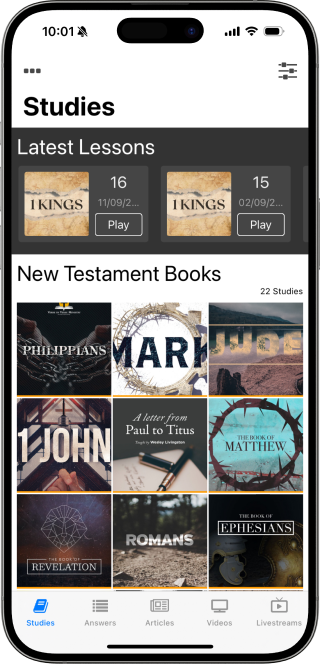
Access all of our teaching materials through our smartphone apps conveniently and quickly.